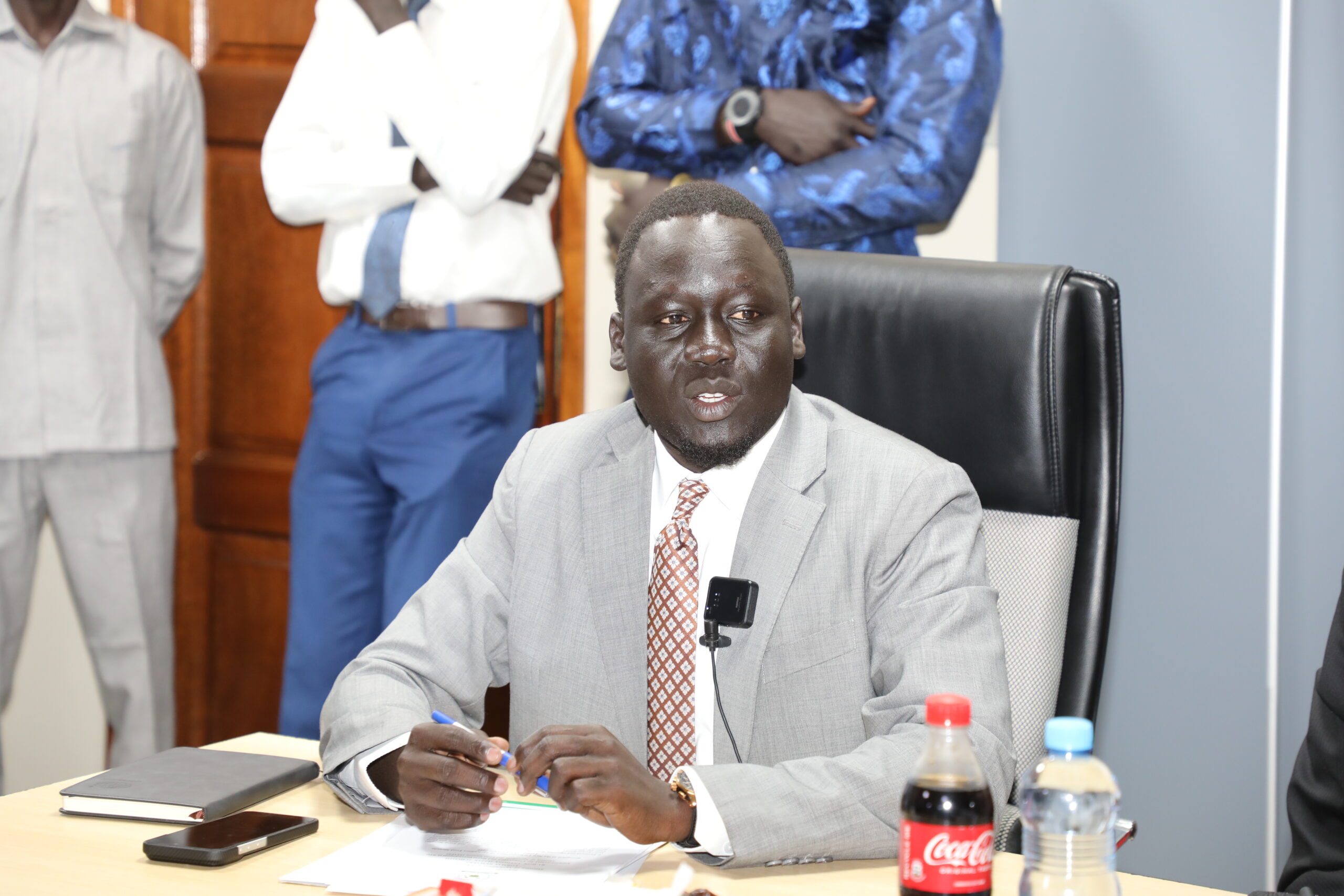
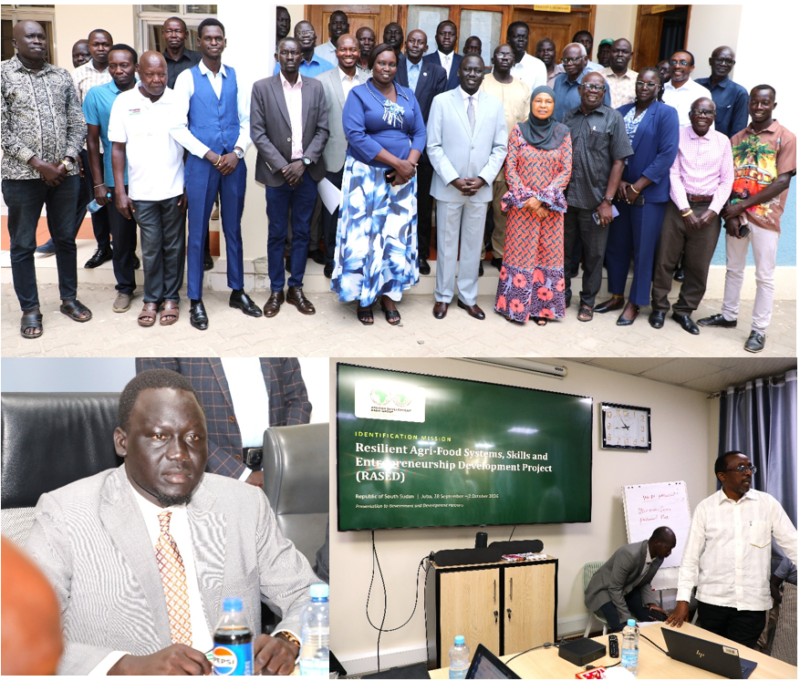
 Juba, 29 September 2026 — The Ministry of Agriculture and Food Security (MAFS) in collaboration with the African Development Bank (AfDB) convened a government stakeholder consultation meeting on Tuesday, 29 September 2026, at Cassava Hall at the MAFS complex in Juba to discuss the proposed Resilient Agri-Food Systems, Skills and Entrepreneurship Development (RASED) Project. The meeting was opened by Hon. Anthony Majak Achuoth, MAFS Undersecretary for Cooperatives and Rural Development, the meeting was part of the African Development Bank Group’s project identification mission, which took place from 29 September and will continue through to 2 October 2026. Participants reviewed the project concept, proposed components, activities, financing options and implementation arrangements through presentations, breakout discussions and plenary feedback. Stakeholders affirmed the project’s strategic relevance to national priorities and emphasised the need for integrated investments in production, skills development and institutional strengthening to accelerate food security and inclusive economic growth.
The proposed five-year Project seeks to strengthen food security, climate resilience and economic opportunities, particularly for women, young people and vulnerable communities. Its proposed geographic coverage includes Northern Bahr El Ghazal, Eastern Equatoria, Central Equatoria, Jonglei, Western Equatoria and Lakes. “This initiative comes at a critical time when South Sudan is striving to transform its agriculture sector into a driver of food security, employment, and inclusive growth,” Hon. Achuoth said. He emphasised the importance of combining agricultural investment with skills, enterprise development and stronger institutions to address the challenges facing producers and communities.
Discussions covered four proposed components: resilient agri-food systems; skills and agricultural enterprise development; institutional capacity and community resilience; and project management and coordination. Agricultural activities under consideration include quality seeds and climate-smart inputs, farmer field and business schools, digital advisory services, fisheries post-harvest support, expansion of the Aweil Rice Scheme, and small-scale and solar irrigation, storage and aggregation facilities in other target areas. An integrated digital early-warning platform would support preparedness for climate and conflict shocks through agreed triggers, early actions and community structures. Skills and enterprise activities would include upgrading technical and vocational training institutions, mobile training for underserved communities, apprenticeships, job placement, business advisory services, access to finance and stronger market connections.
“The Government of South Sudan reaffirms its commitment to providing the policy support, coordination and facilitation necessary for the success of this mission and the eventual implementation of RASED. We deeply appreciate the African Development Bank Group’s continued partnership and support for South Sudan’s development agenda. Together, we can make RASED a model for resilience, empowerment and sustainable transformation in our agri-food systems. I urge implementing partners to coordinate donor engagements, including those with the African Development Bank, through the Ministry of Agriculture and Food Security, specifically the Single Projects Coordination Unit (SPCU). This will strengthen government oversight, ensure alignment with national priorities and prevent the coordination challenges encountered in other projects,”said Hon. Anthony Majak Achuoth, MAFS Undersecretary for Cooperatives and Rural Development.
The proposed project is expected to cost 60 million Units of Account (UA), the African Development Bank’s funding currency. Of this, UA 20 million has been committed, another UA 20 million has been requested and awaits approval, and UA 15.5 million may come from Germany’s KfW development bank, subject to confirmation. Discussions continue on additional funding and the government’s contribution. Hon. Achuoth welcomed the Bank’s efforts to bring partners together to support the project.
The project aims to support 40,000 farming households, train 10,000 young people and women, help 5,000 small agricultural businesses access funding and customers, create 30,000 jobs, and train 200 government staff. These targets may change as planning continues. Participants also discussed how to manage funds responsibly, strengthen government services, help communities resolve conflicts and ensure institutions work together. A partner organisation or group of UN agencies may help deliver the project, but responsibilities are still being agreed.
Further discussions with development partners, UN agencies and training institutions will help finalise the project’s activities, funding and management arrangements. Preparation is planned for February 2027, a detailed review for April 2027, and submission to the African Development Bank’s Board for consideration in June 2027, subject to the required approvals.