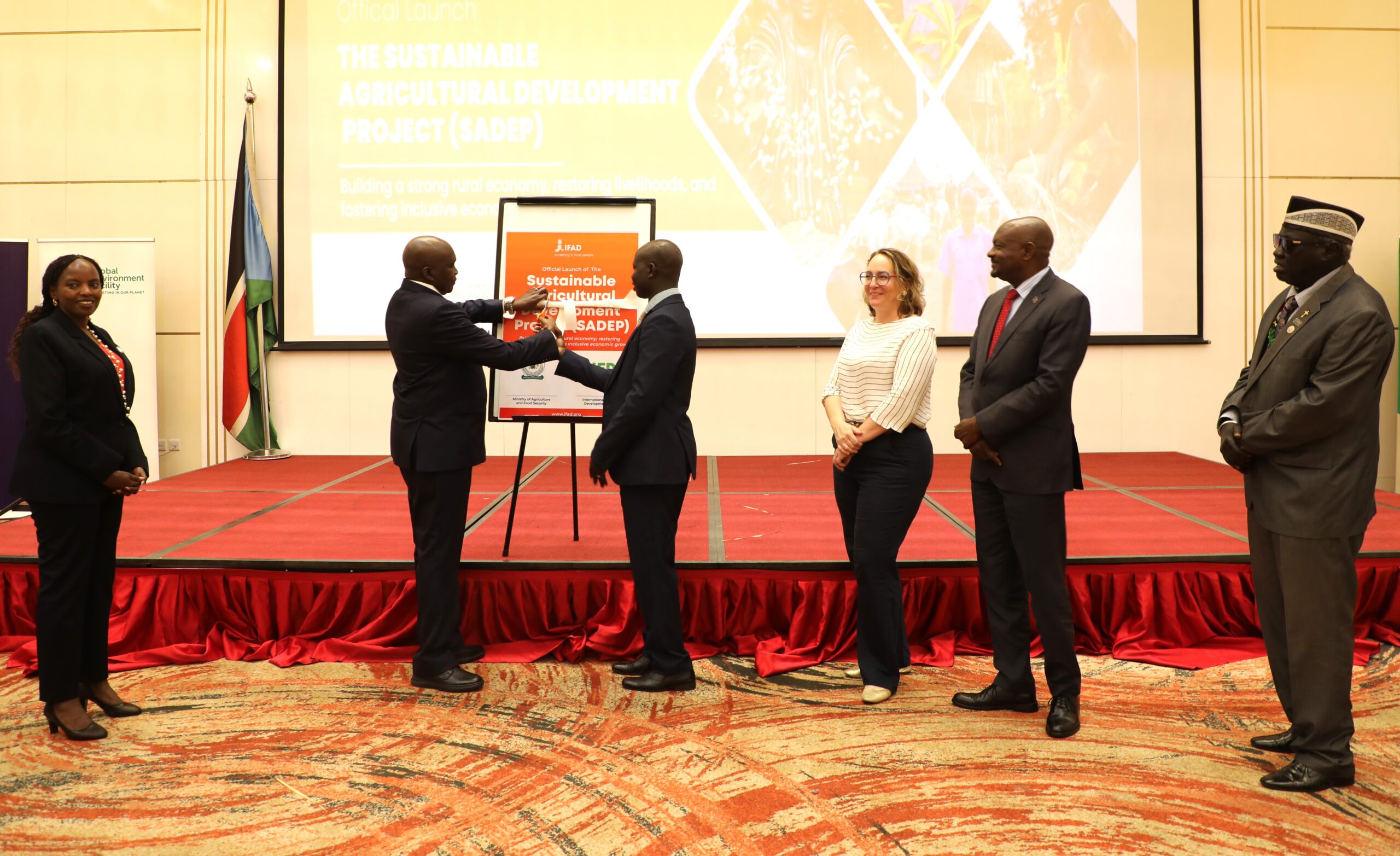
JUBA, South Sudan – 31- The Ministry of Agriculture and Food Security on Tuesday, March 31, 2026, together with its partners, has launched the latest Crop and Food Security Assessment Mission (CFSAM) report, which indicates that agricultural production has improved over the past year in South Sudan. However, the report also highlights that high levels of acute food insecurity and malnutrition persist, driven by conflict, climate shocks, economic challenges, and longstanding structural vulnerabilities across the country.
According to the latest Special Report: 2025 FAO/WFP Crop and Food Security Assessment Mission (CFSAM) to the Republic of South Sudan, an annual joint initiative by FAO and WFP that assesses national food production, the 2025 net cereal production in the traditional smallholder sector is estimated at about 1.2 million tonnes – eight percent higher than the 2024 output and 27 percent above the five-year average.
” While we are encouraged by the improvement in agricultural production, the findings clearly show that many South Sudanese households continue to face severe food insecurity driven by conflict, economic pressures, and high food prices. The Government is committed to working with partners to build resilient food systems, support our farmers, and ensure that increased production translates into improved food access and nutrition for all.”,
says Hon. Lily Albino Akol Akol, Deputy Minister for Agriculture and Food Security in South Sudan.
The recent report, which estimates agricultural output, determines food import needs, and evaluates household access to food, highlights an increase in production and acreage. This growth reflects a rise in the number of farming households, including returnees mainly from Sudan engaged in agriculture, alongside a significant number of urban households participating in farming in nearby rural areas as a secondary source of income, encouraged by high food prices.
“FAO remains committed to supporting the Government of South Sudan to strengthen agricultural systems by improving seed systems, expanding access to extension services, and promoting climate-smart practices, so that farmers can sustainably increase production, protect their livelihoods, and contribute to long-term food security and resilience,” Said Felix Dvzurumi, FAO’s acting Country Representative in South Sudan.
However, despite these gains, significant challenges persist. The prices of sorghum, maize, and wheat have continued their upward trajectory in 2025. Depleting coping capacities among households exacerbate food insecurity and malnutrition.
“This situation requires urgent attention and coordinated action to mitigate the impacts on vulnerable populations,” says Adham Effendi, WFP’s acting Country Director in South Sudan. “WFP is scaling up assistance to meet the most vulnerable people’s food needs. “
Of particular concern is the rapidly worsening nutrition crisis. Between July 2025 and June 2026, over 3.2 million people, including 2.1 million children under five and 1.1 million pregnant and breastfeeding women, are projected to suffer from acute malnutrition. Conflict-related disruptions to services, cholera outbreaks, and deepening food insecurity are pushing several counties towards IPC AMN Phase 5 (Extremely Critical).